2026 Best Slim Frame Aluminum Sliding Doors?
Slim frame aluminum sliding doors bring wide views and clean sightlines to homes, apartments, and renovation projects. But a narrow profile alone does not make a door the best choice. Performance depends on the complete assembly: frame, glass, seals, rollers, drainage, and installation. Small details matter. A stiff handle and smooth, quiet movement often reveal more than a showroom photograph.
The U.S. Department of Energy’s Energy Saver guidance estimates that windows account for about 25–30% of residential heating and cooling energy use. That figure covers windows broadly, not sliding doors alone, so it should be treated as context—not a product guarantee. For meaningful comparisons, check the National Fenestration Rating Council (NFRC) label for certified U-factor and solar heat gain coefficient (SHGC) ratings. Lower U-factor generally indicates less heat transfer; the appropriate SHGC depends on climate, orientation, and shading. There is no universal winner.
This 2026 guide examines what buyers should compare in Slim frame aluminum sliding doors, including thermal breaks, glazing options, air and water performance, hardware, and service access. Ask for ratings that match the exact door configuration, not just a similar model. A slim frame can look elegant, yet leave less room for insulation. That trade-off deserves scrutiny. We’ll also consider practical signs of quality, from even panel gaps to reliable locking and replaceable rollers, while noting where manufacturer claims need independent verification.
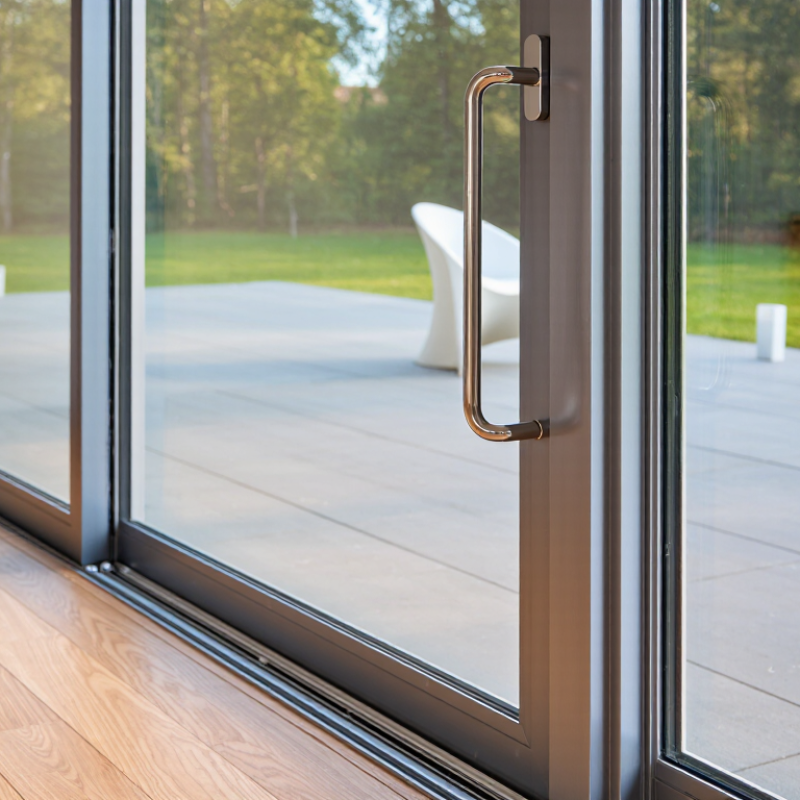
What Defines a Slim Frame Aluminum Sliding Door in 2026
In 2026, “slim frame” describes a design approach, not one universal measurement. It usually means narrower visible aluminum profiles around the glass, creating a clearer view and more daylight. Check the sightline on a full-size sample, not just a small catalogue image. A frame that looks delicate in a picture can feel bulky beside a wide opening.
Appearance is only part of the definition. The door still needs stable profiles, well-fitted rollers, secure locking, and drainage that can clear rainwater. Ask for the tested panel size and glass specification, since performance can vary with both. Look closely at the meeting point between sliding panels; uneven gaps may affect comfort and operation. Slim does not mean flimsy. A narrower profile can limit design choices or require careful engineering, so compare the frame dimensions with thermal and structural information. Details matter. If a supplier cannot explain how the door handles water, wind, and repeated use, the elegant sightline alone is not enough. I would also check the sill height in person; a low threshold may look clean but still feel awkward for the home’s layout.
Key Features to Compare Before Choosing a Sliding Door
For a slim-frame aluminum sliding door, compare performance before judging the sightline. The U.S. Department of Energy’s Energy Saver guidance estimates that heat gain and loss through windows account for 25% to 30% of residential heating and cooling energy use. That figure is not a door-only estimate, but it shows why glass and frame ratings matter. Check the NFRC label for U-factor and solar heat gain coefficient (SHGC); lower U-factor generally means better insulation, while suitable SHGC depends on climate and orientation.
Then inspect the hardware and weather seals. A wide, heavy panel should glide without jolting, and its lock should engage without forcing the handle. Ask for tested air-leakage and water-penetration results under the applicable fenestration performance standard, such as NAFS. Ratings vary by size and configuration, so confirm they cover the door you plan to buy. Details matter.
Slim frames leave less room for bulky reinforcement, and aluminum conducts heat readily. Look for a thermal break, drainage paths, replaceable rollers, and clear warranty terms. On a windy, rainy site, a low sill may be convenient but can need careful water management. I would compare sample corners and operating panels in person; showroom lighting can flatter finishes, but it cannot reveal a stiff roller or a weak seal.
Top Slim Frame Aluminum Door Types for Different Spaces
Slim frame aluminum sliding doors suit different spaces when their opening style matches daily use. For compact apartments, a two-panel sliding door saves floor space and keeps furniture flexible. A larger living room may benefit from a multi-panel system with a wider glass opening. It can connect the room with a garden or balcony.
Pocket sliding doors disappear into the wall, making them useful for minimalist interiors and narrow passages. However, the wall must allow enough cavity depth for the panels and hardware. Corner sliding doors create wider views in modern homes, but their installation needs accurate structural planning. For balconies, a thermally broken aluminum frame can reduce heat transfer and condensation. Fixed panels beside sliding sections also add daylight without requiring extra movement. In my experience, smooth operation depends as much on the track and drainage as on the frame profile. A slim frame is not automatically a better door.
Tips: Check the opening width, wind exposure, drainage path, and glass weight before choosing a system. Ask for tested air, water, and wind performance. Select low-e glass for strong sunlight, especially near south-facing rooms. Keep the lower track clean. Small debris can make a premium door feel disappointing. Door handles also deserve attention; an elegant handle may still feel awkward after repeated daily use. Reflect on maintenance access too. Hidden parts look refined, but repairs can become harder later.
2026 Best Slim-Frame Aluminum Sliding Doors: Typical Opening Width by Space
Slim-frame aluminum sliding doors are commonly selected according to the available opening and the amount of daylight required. Compact balcony systems typically suit openings of about 1.8–2.4 m, while living-room, terrace, and corner-opening systems generally use wider configurations. These are typical residential planning ranges; final dimensions depend on structural conditions, panel weight, glass specification, drainage, and local building requirements.
How to Evaluate Glass, Thermal Performance, and Security
2026 Best Slim Frame Aluminum Sliding Doors?
A slim frame looks elegant, but the glass usually controls comfort more than the visible aluminum. For colder climates, compare the whole door’s U-value, not only the center-glass rating. Lower values generally indicate better insulation. Low-emissivity coatings, insulated glass units, and warm-edge spacers can reduce heat loss near the glass perimeter. In sunny rooms, also check the solar heat gain coefficient. Too much gain may turn a beautiful room into a greenhouse by mid-afternoon.
Ask for tested air, water, and structural performance. A sales sheet is not enough. I would request the test method, report date, and exact glass configuration. Small gaps matter. During a site inspection, check whether the panels roll smoothly without scraping, and look for condensation around corners after a cold night. A thermally broken aluminum frame helps, but poor installation can defeat it. This is where many comparisons become unfair.
Security is layered, not defined by a heavy handle. Look for laminated safety glass, a reliable multi-point locking system, anti-lift devices, and a track that cannot be easily accessed from outside. Tempered glass may break into smaller pieces, but laminated glass can remain bonded after impact. Neither option makes a door invulnerable. My own early evaluations focused too much on frame width and ignored drainage details. That was a mistake. Request installation guidance, maintenance intervals, and independent certification before choosing a slim sliding door.
Installation, Maintenance, and Long-Term Value Considerations
Slim-frame aluminum sliding doors can brighten a room while keeping the view visually open. Their slim profiles leave less room to hide uneven openings, so careful measuring matters. Check wall plumb, floor level, and drainage before ordering. A small installation error can cause dragging panels, uneven gaps, or extra strain on rollers. Professional installation may cost more, but it can prevent repairs that are difficult once trim is finished.
Tips: Keep the track clear of grit and leaves. Use a soft brush or vacuum, then wipe it with a damp cloth. Avoid forcing a panel that sticks; check for debris and ask a qualified installer to inspect persistent problems. Small details matter.
For long-term value, compare the full specification, not just the frame’s appearance. Look at glazing, weather seals, hardware, and available replacement parts. These affect comfort, maintenance, and how well the door handles daily use. Aluminum is durable, but finishes and moving parts still need periodic care. A perfectly clean track is easy to promise, harder to maintain in a windy home. Plan for seasonal cleaning, and confirm that the door suits your exposure to rain, dust, and strong sun.