The 2026 global cat litter market is becoming more specialized, but buyers still face confusing product claims. Cat Litter Sand now includes bentonite, tofu, wood, paper, silica gel, and mineral blends. Each type differs in absorbency, odor control, dust level, weight, disposal options, and shipping cost.
Market research supports this growing complexity. Grand View Research identifies rising cat ownership, premium products, and odor-control innovation as major market drivers. Fortune Business Insights also reports continued growth in the global cat litter market, supported by urban households and e-commerce distribution. The American Pet Products Association’s recent industry data shows that millions of U.S. households keep cats, creating steady demand for convenient and hygienic litter. In Europe, FEDIAF reports a substantial cat population, reinforcing the need for region-specific sourcing and packaging decisions.
The practical question is not simply which litter sells best. It is whether the product performs consistently in humid warehouses, small apartments, automated litter boxes, and long-distance containers. A fine bentonite sample may clump quickly, yet create visible dust around a black litter mat. Tofu litter may feel lighter and cleaner, but its price can fluctuate with agricultural supply. Silica gel may control moisture effectively, although some buyers dislike its texture.
These differences matter.
This guide compares the leading Cat Litter Sand types for global buyers in 2026. It considers material performance, buyer expectations, supplier reliability, packaging, transport efficiency, and responsible disposal. Some market forecasts vary by research firm. That uncertainty deserves attention, not concealment. Real-world testing remains essential before large-scale purchasing.
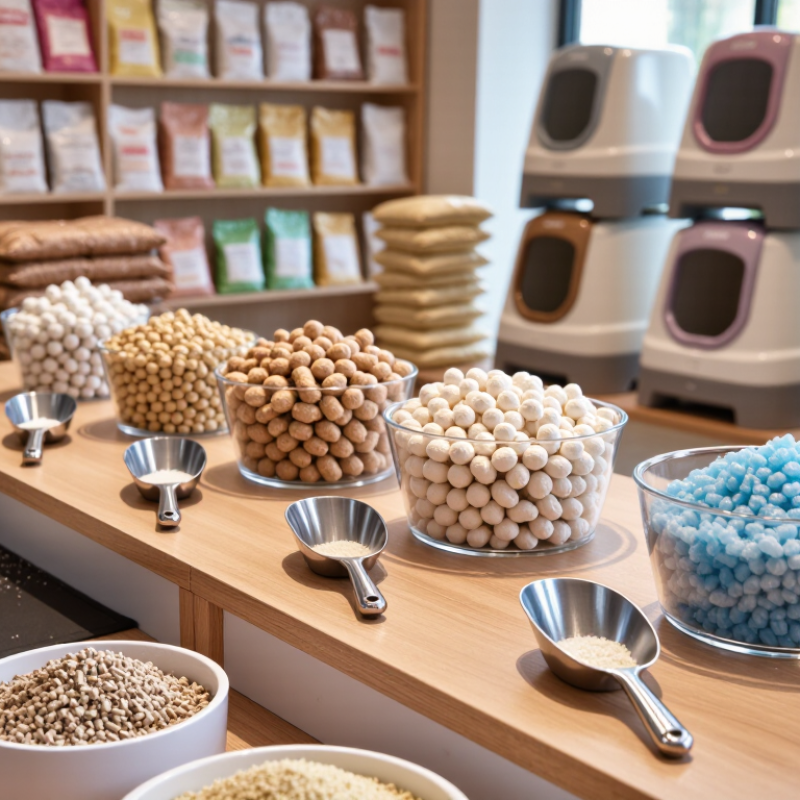
2026 Top Cat Litter Sand Types for Global Buyers
What Cat Litter Sand Is and How It Works
Cat litter sand is a loose, absorbent material placed in a tray for urine and feces management. The term “sand” is broad. It may describe clay granules, silica crystals, mineral particles, or plant-based fibers. Each type reacts differently to moisture, odor, dust, and cleaning routines.
Clumping clay usually contains swelling minerals. When liquid reaches the granules, they bind into a firm mass. This makes daily scooping efficient and keeps the remaining litter drier. Non-clumping mineral litter absorbs liquid without forming a solid ball. Silica crystals trap moisture inside tiny pores and can reduce odor when the tray has good airflow. Plant-based litter may absorb moisture through fibrous particles, but its texture and breakdown speed can vary.
It is granular. Dust matters. Fine particles may irritate sensitive cats and household members, especially in poorly ventilated rooms. A low-dust product is preferable, but no litter is completely dust-free. I have found that deep trays reduce tracking more effectively than marketing claims suggest. Yet some cats reject unfamiliar textures, even when owners prefer them.
Effective use depends on more than material choice. Keep enough litter for natural digging, remove waste frequently, and wash the tray with mild soap. Avoid sudden changes when possible. Observe paw licking, sneezing, avoidance, or accidents. These signs may reflect texture dislike, excessive fragrance, medical concerns, or an unclean tray. Disposal rules also differ by region, so local waste guidance should be checked.
| Cat Litter Type | Primary Material | How It Works | Clumping | Odor Control | Dust and Tracking Profile | Environmental Considerations | Best Suited For |
|---|---|---|---|---|---|---|---|
| Bentonite Clay | Sodium bentonite clay | Absorbs urine and expands to form solid clumps around wet areas. | Excellent | Very good when cleaned regularly; unscented products depend mainly on absorption and ventilation. | Can produce dust; fine particles may track outside the box. | Mineral-based and generally not biodegradable; requires mineral extraction. | Multi-cat homes and buyers prioritizing strong clumping performance. |
| Silica Gel Crystals | Porous silicon dioxide crystals | Pores absorb liquid and trap odor molecules; moisture is retained in the crystals. | Usually non-clumping | Very good moisture and odor control when crystals are stirred and replaced as directed. | Typically low dust; larger crystals often reduce tracking. | Not biodegradable; silica gel is generally chemically stable and lightweight for transport. | Small spaces, odor-sensitive households, and lower-frequency replacement routines. |
| Tofu or Soy Fiber | Soybean fiber, tofu residue, or processed plant fiber | Plant fibers absorb urine and bind together into lightweight clumps. | Good to excellent | Good; performance varies with fiber structure, additives, and cleaning frequency. | Usually low dust and lightweight; pellets may scatter if the cat digs actively. | Made from renewable plant material and often biodegradable; disposal rules vary by region. | Buyers seeking a lightweight plant-based alternative with clumping ability. |
| Wood Pellets or Wood Fiber | Processed sawdust, softwood, or hardwood fiber | Pellets absorb liquid and gradually break down into damp sawdust. | Usually non-clumping | Moderate to good; natural wood scent may help mask odors. | Low dust when pellets remain intact; broken-down material may track. | Renewable and often biodegradable; responsible sourcing and moisture control are important. | Shelters, budget-conscious users, and households preferring larger pellets. |
| Recycled Paper | Recycled paper pellets, granules, or compressed fibers | Compressed paper absorbs moisture without forming conventional clay-like clumps. | Usually non-clumping | Moderate; requires frequent removal of wet or soiled areas. | Very low dust; pellets generally have low tracking. | Uses recycled fiber and is generally biodegradable; recycling or composting depends on contamination and local regulations. | Kittens, cats recovering from surgery, and dust-sensitive households. |
| Corn or Cassava | Corn, cassava starch, or other grain-based plant ingredients | Starch and plant particles absorb liquid and create scoopable clumps. | Good to excellent | Good when clumps are removed promptly; plant-based odor control varies by formulation. | Generally low to moderate dust; lightweight granules may track. | Renewable and potentially biodegradable; agriculture, moisture, and pest-control considerations apply. | Buyers wanting plant-based clumping litter with a familiar granular texture. |
| Walnut Shell | Ground walnut shells | Porous shell particles absorb moisture and may form clumps depending on particle size and formulation. | Moderate to good | Moderate to good; natural shell material helps reduce moisture-related odor. | Often low dust, but fine grades may track; dark color can make waste harder to inspect. | Uses an agricultural by-product and is generally biodegradable; avoid if household members or pets have relevant nut sensitivities. | Eco-conscious buyers who prefer a natural, darker-colored litter. |
| Grass Seed Fiber | Processed grass seed fiber and plant-based particles | Fine plant fibers absorb urine and bind into relatively light clumps. | Good | Good with regular scooping; natural odor control depends on moisture absorption. | Usually low dust, although fine particles can increase tracking. | Plant-based and generally biodegradable; supply depends on agricultural production and processing. | Lightweight-litter users and households seeking a renewable clumping material. |
Note: Dust, tracking, clumping strength, odor control, and disposal suitability can vary by particle size, additives, manufacturing process, humidity, and local waste regulations.
Update your browser to view this website correctly. Update my browser now