7 Pool Leaf Skimmer Buying Tips for Global Buyers?

Choosing a Pool Leaf Skimmer for international use requires more than comparing prices and product photos. Pool size, debris type, water chemistry, and cleaning frequency all affect the right design. A lightweight net may suit a small residential pool, while a reinforced frame and telescopic handle may perform better in hotels, resorts, and commercial facilities. The difference often appears after repeated use.

This guide presents seven practical buying tips for global buyers. It examines mesh depth, frame strength, handle compatibility, corrosion resistance, storage, packaging, and supplier reliability. A fine mesh can catch small insects, but it may collect water slowly and feel heavy. A wide-mouth net removes leaves quickly, though tiny debris may pass through. Small details matter. Buyers should request material specifications, product dimensions, load-testing evidence, and clear photos of connectors before placing an order. Samples are valuable because online images rarely show stitching quality or edge flexibility.

International purchasing also requires careful checks beyond product performance. Confirm minimum order quantities, replacement-part availability, export packaging, delivery terms, and after-sales support. Regional pool practices can differ, so a supplier should explain whether the skimmer fits common poles and cleaning systems in the target market. Claims about durability deserve verification through testing records and customer feedback. No checklist is perfect. Even experienced buyers can overlook warehouse storage conditions or handle length. A reliable decision combines supplier experience, practical testing, transparent documentation, and realistic expectations.
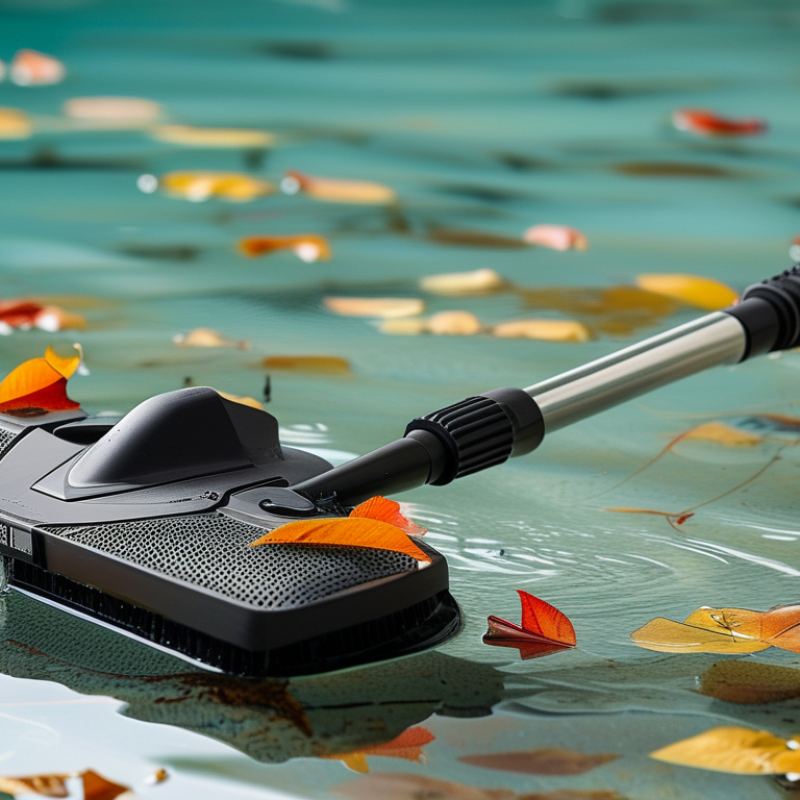
7 Pool Leaf Skimmer Buying Tips for Global Buyers?

Define the Pool Leaf Skimmer’s Purpose and Cleaning Environment

Before comparing materials or handle lengths, define what the pool leaf skimmer must remove. Large leaves, fine insects, pine needles, and surface debris require different net depths and mesh sizes. A deep bag suits heavy autumn leaves, while a shallow, fine-mesh net works better for daily surface cleaning. The wrong choice creates drag and may push debris across the water.

The cleaning environment matters just as much. A small residential pool needs a lightweight frame for frequent use. A pool surrounded by trees may require a stronger frame and a deeper collection bag. Saltwater, strong sunlight, and regular chlorine exposure can gradually weaken plastic and fabric. Check the material specifications carefully. Do not rely on appearance alone.

Hands-on maintenance experience shows that maneuverability often matters more than maximum size. A wide skimmer may collect more debris, but it can feel awkward near steps, corners, and ladders. Measure the pool’s difficult areas before buying. Telescopic poles are useful, yet loose connections can reduce control. A secure locking system deserves attention.

One overlooked detail is storage. Wet nets left in direct sun can develop odors, lose shape, or become brittle. Rinse the skimmer with clean water and let it dry fully. Even careful buyers sometimes choose the strongest-looking model without considering comfort. That mistake becomes obvious after several minutes of repetitive cleaning.

Compare Skimmer Types, Materials, and Collection Methods

7 Pool Leaf Skimmer Buying Tips for Global Buyers

When comparing pool skimmers, start with the debris they must collect. A flat leaf net works well for large leaves and floating insects. Its shallow frame moves quickly across the water. A deep-bag skimmer holds more debris but can feel heavy when full. Fine-mesh models catch pollen and sand-like particles. They also clog faster. Choose based on your pool’s surroundings, not only its price.

Material affects weight, durability, and daily comfort. Aluminum handles are light and practical for frequent cleaning. Stainless steel resists corrosion but usually costs more. Reinforced plastic frames can be affordable and easy to replace. Check the frame corners, mesh seams, and pole connection carefully. Weak stitching may fail after repeated lifting. I once used a fine mesh near flowering trees, and emptying it became frustratingly slow. That experience changed my preference.

Collection methods also deserve comparison. Manual nets offer direct control and need no power source. Surface skimmers can collect debris continuously, but they may require setup and regular basket cleaning. Some systems pull debris toward a fixed collection basket, reducing hand work. However, they may miss leaves trapped along pool edges. Look for smooth edges, secure clips, clear capacity details, and available replacement parts. A compact skimmer is easier to ship globally, yet a longer handle may serve large pools better. There is no perfect design. Surface wind and local debris patterns can change the best choice.

Check Pole Length, Net Design, and Ease of Handling

7 Pool Leaf Skimmer Buying Tips for Global Buyers

Check Pole Length, Net Design, and Ease of Handling

When buying a pool leaf skimmer for international use, start with pole length. A telescopic pole should reach the pool center without forcing your shoulders forward. Measure from the deck to the waterline, then add enough reach for comfortable control. Very long poles sound useful. They can feel unstable in wind. I learned this after using one that flexed near the handle. The reach was excellent, but precision suffered.

Check the net design against your pool’s typical debris. A deep, fine-mesh net catches small insects and sediment, but it drags through water. A shallow, wide net moves faster and suits leaves, petals, and twigs. Reinforced edges help when the frame meets tile or concrete. Mesh attachment also matters. Loose stitching can collect debris and weaken after repeated rinsing. Ask suppliers for mesh dimensions, frame material, and load guidance, not only attractive photographs. That is practical evidence.

Ease of handling affects daily use more than specifications suggest. Choose a balanced frame, a secure grip, and a locking collar that opens without tools. Test the pole connection if possible. It should not rotate while lifting wet leaves. Rinse the net after each use, then inspect seams and clamps. I sometimes prefer a lighter net, even when it holds less, because fatigue changes technique. A technically stronger skimmer may remain unused in a storage corner. Buyer feedback helps, but verify whether reviewers used similar pool sizes and debris conditions.

Evaluate Durability, Compatibility, and Storage Requirements

7 Pool Leaf Skimmer Buying Tips for Global Buyers

Evaluate Durability, Compatibility, and Storage Requirements

A pool leaf skimmer faces wet storage, sunlight, chlorine, and repeated bending. Choose a corrosion-resistant frame, reinforced net seams, and a handle with limited flex. Aluminum is light, but poorly finished surfaces can oxidize. Fiberglass handles resist corrosion, yet they may crack after impact. Inspect the connection joint carefully. It often fails before the net.

Check seven practical points: frame strength, mesh depth, handle length, pole diameter, connector type, storage footprint, and replacement-part access. Measure your existing pole before ordering. A universal connector is not always universal. Fine mesh captures pollen, while coarse mesh moves heavy leaves faster. Pick based on local debris, not advertising language. The U.S. Consumer Product Safety Commission reports an annual average of about 6,500 emergency-department-treated, nonfatal drowning injuries among children under 15. A skimmer is not safety equipment, but reliable cleaning can support clearer visibility during routine supervision.

Storage deserves equal attention. A wet net trapped in a closed cabinet can smell, deform, or grow residue. Rinse it with fresh water, let it drain fully, and hang it away from direct sun. Allow roughly 1.2 to 1.8 meters for long-pole storage, depending on the model. CDC’s Model Aquatic Health Code emphasizes documented inspection and maintenance of aquatic equipment, a useful benchmark for commercial buyers. I have seen buyers overvalue extra reach. Longer is not always better. It can increase wrist strain and encourage careless scraping against the pool wall. Check twice. Store it dry.

7 Pool Leaf Skimmer Buying Tips for Global Buyers? - Evaluate Durability, Compatibility, and Storage Requirements

Buying Tip What to Evaluate Practical Benchmark Why It Matters Global Buyer Consideration
1. Check Frame Durability Inspect the frame material, joint construction, rim stiffness, and resistance to bending or cracking. Look for corrosion-resistant plastic, reinforced polymer, or anodized aluminum components with securely molded or fastened joints. A rigid frame keeps the net opening stable when collecting wet leaves, insects, and other debris. For humid, coastal, or high-chlorine environments, prioritize materials that resist corrosion and ultraviolet exposure.
2. Evaluate Net Quality Compare mesh depth, stitching or edge attachment, mesh fineness, and resistance to tearing. A fine mesh captures small debris, while a deeper bag improves collection capacity; the attachment should not leave exposed sharp edges. Net design affects cleaning speed, debris retention, and the likelihood of snagging on pool surfaces. Fine mesh is useful for pollen and small insects, but it may require more frequent emptying when used for large quantities of leaves.
3. Confirm Pole Compatibility Verify the handle connection type, internal diameter, locking method, and pole length requirements. Common connections include push-button and threaded fittings; the skimmer should lock firmly without excessive wobble. A compatible connection prevents detachment and improves control when reaching the center or deep end of a pool. Connection standards can vary by market and supplier, so request exact fitting dimensions before placing a bulk order.
4. Match the Pool Type Consider above-ground or in-ground use, pool size, wall shape, surface finish, and access around steps or corners. A lightweight net suits routine surface cleaning; a reinforced frame is preferable for large pools or heavier debris loads. The right design reduces scraping, improves reach, and limits stress on the pool wall and the user’s arms. For multiple pool types, select a universal-fitting model only after testing it with the intended pole systems and pool surfaces.
5. Assess Ergonomics and Load Review total weight, handle angle, grip comfort, balance, and the net’s resistance when lifted from water. The tool should remain balanced when the net is partially filled and should not require excessive force to maneuver. Good balance reduces wrist and shoulder strain during repeated cleaning operations. For commercial or frequent-use applications, compare packed weight and handling comfort through sample testing before shipment.
6. Plan Storage Requirements Measure the assembled length, folded or detachable dimensions, hanging options, and drying requirements. A detachable head or collapsible pole can reduce storage volume; the net should be rinsed and fully dried before storage. Proper storage helps prevent mildew, odor, deformation, and premature deterioration of the net and frame. For warehouses and retail displays, compare carton dimensions, stacking efficiency, and moisture-resistant packaging.
7. Verify Maintenance and Service Life Check rinsing instructions, replaceable parts, cleaning access, UV resistance, and warranty or inspection procedures. The net should be easy to rinse with fresh water, and replacement heads or nets should be available when practical. Simple maintenance extends service life and lowers the long-term cost of ownership. Confirm spare-part availability, packaging language, import documentation, and quality-inspection requirements for the destination market.

Selection should be based on the intended pool environment, cleaning frequency, compatible pole system, storage space, and expected debris load. Always confirm technical dimensions with the supplier before purchase.

Balance Purchase Cost, Maintenance Needs, and Supplier Support

7 Pool Leaf Skimmer Buying Tips for Global Buyers

Balance Purchase Cost, Maintenance Needs, and Supplier Support

A pool leaf skimmer looks simple, but its total cost can surprise global buyers. In purchasing work, I have seen low-priced tools fail after a few weeks. The frame bent near the handle joint. Replacement shipping then cost more than the original order. Compare the complete purchase cost, including packaging, freight, spare nets, and expected replacements. Ask for material specifications, mesh strength, frame thickness, and handle compatibility. A clear specification sheet shows technical confidence.

Maintenance should fit the pool’s daily cleaning routine. Choose a net that releases wet leaves without excessive scraping. Check whether the net can be replaced with common tools. This small detail reduces downtime for hotels, apartment pools, and service teams. Rinse the net after use and store the skimmer away from strong sunlight. Simple care matters. Still, buyers should not assume every advertised “durable” material performs equally well. Request a sample and test it with wet leaves, flower debris, and small stones.

Supplier support can protect the investment. Before ordering, confirm response times, spare-part availability, packaging standards, and after-sales procedures. Ask whether the supplier can provide replacement nets in the same dimensions. Written answers are more reliable than vague promises. A responsible supplier should share inspection photos, loading details, and realistic lead times. I also recommend checking a small trial order before committing to a large shipment. It may feel slower, but it can reveal handle looseness, poor stitching, or confusing instructions early.

Your browser is out of date!

Update your browser to view this website correctly. Update my browser now

×