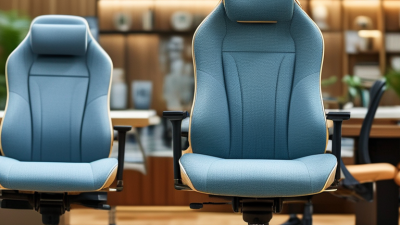
Choosing the best seating chairs made in China requires more than comparing prices online. The right choice depends on comfort, construction, materials, and the environment where each chair will be used. A dining chair may need firm support and stain-resistant fabric. A hotel lounge chair may require deeper cushioning and stronger commercial-grade frames.
Chinese seating chairs cover many styles, from solid wood restaurant chairs to lightweight metal café models. During product evaluations, I examine welds, corner joints, foam recovery, fabric tension, and surface finishing. A chair can look elegant in photographs but feel unstable on a real floor. Small details matter. Uneven legs become obvious after several hours of use.
Reliable suppliers should provide clear specifications, production photos, material samples, and test documentation when appropriate. Buyers should also confirm load capacity, packaging standards, replacement parts, and lead times. Certifications can support confidence, but they should be checked against the actual product and market requirements. A document alone proves little.
There is no universal winner. That is worth remembering. The best seating chairs balance design, durability, comfort, and total cost for a specific project. Some buyers may prefer factory-direct pricing, while others need stronger quality control and customization support. My own evaluations are not perfect, especially when long-term performance cannot be observed immediately. That limitation deserves honesty. This guide compares practical options and highlights questions buyers should ask before placing an order. It aims to make sourcing clearer, not simply cheaper.
What Are the Best Seating Chairs Made in China?
Chinese seating chairs should be judged by verified performance, not appearance alone. ANSI/BIFMA X5.1 is widely used for general-purpose office chairs. It examines stability, strength, durability, and functional safety. EN 1335 focuses on office work chairs, including dimensions, adjustment ranges, and safety requirements. ISO 7173 evaluates seating strength and durability through controlled tests. These standards serve different purposes. One certificate cannot prove complete product quality.
During factory evaluations, inspect the test report, sample code, and production date. Check whether the tested structure matches the chair being shipped. Look closely at welds, base connections, casters, and adjustment controls. A chair may pass laboratory testing but still feel unstable after poor assembly. That is an uncomfortable reality. Ask for batch inspection records and material specifications. Independent testing adds stronger evidence than a supplier’s general statement.
Tips: Request complete reports, not only certificate images. Confirm the applicable standard and test version. Sit on a production sample for several minutes. Check lumbar support, seat pressure, noise, and return movement. For large orders, test random units after delivery. Standards reduce risk, but they do not replace practical inspection. Some buyers focus too heavily on compliance and overlook daily comfort. That approach needs reconsideration.
Chinese-made seating chairs can offer strong value when dimensions match the user, not just the room. For daily desk work, a seat height of 40–48 cm suits many adults. Measure from the floor to the compressed seat surface. A chair that looks tall may sink under real body weight. Small details matter. Check whether feet rest flat, with knees close to a right angle. That simple test reveals more than showroom appearance.
The backrest angle deserves equal attention. An angle between 90 and 110° can support upright work without forcing a rigid posture. Near 90° feels focused, while 100–110° often feels easier during longer sessions. Still, numbers are not universal. Seat depth, lumbar height, and cushion firmness can change the experience. When reviewing supplier samples, inspect welds, frame joints, fabric tension, and adjustment controls. Ask for load testing and dimensional tolerances, not only attractive photographs.
Reliable Chinese manufacturers should provide clear specifications, material details, and repeatable quality checks. Look for stable feet, smooth edges, and a backrest that does not flex unevenly. A 48 cm seat may suit a tall user but strain shorter legs. A 40 cm seat can feel low at a dining table. I once underestimated cushion compression; the final sitting height was lower than the catalog figure. That mistake changed my inspection checklist. Test the chair after thirty minutes, not only for thirty seconds. Comfort is measured in use.
What Are the Best Seating Chairs Made in China?
The best seating chairs made in China combine material control with repeatable durability testing. Steel frames provide strong load support and stable geometry. The World Steel Association’s World Steel in Figures 2024 recorded China’s crude steel output above one billion tonnes in 2023. However, production scale does not guarantee chair quality. Tube thickness, weld consistency, and corrosion protection still require inspection.
Aluminum offers lighter handling and strong corrosion resistance. The International Aluminium Institute notes that recycled aluminum uses about 5% of primary production’s energy. PU cushions feel soft, but density and rebound performance matter more than appearance. A 100,000-cycle seat or backrest test, aligned with ANSI/BIFMA commercial seating methods, can reveal foam collapse, loose joints, and cracked upholstery. It is useful evidence, not a complete guarantee. Human posture varies. Testing can miss careless assembly.
Tips: Request material certificates, foam-density data, weld photographs, and the full laboratory test method. Confirm whether 100,000 cycles covered the seat, back, armrests, or only one component. Ask for corrosion testing details, such as salt-spray hours, because steel may rust beneath attractive powder coating. Small details decide. A chair that survives testing may still feel uncomfortable after six hours. One honest weakness remains: durability data should be reviewed beside ergonomics, repair access, and real user feedback.
| Material or Test Area | Typical Technical Data | Advantages for Seating Chairs | Durability and Maintenance Considerations | Best-Fit Chair Applications | Verification Points for Buyers |
|---|---|---|---|---|---|
| Powder-Coated Steel | Common steel tubing for chair frames is approximately 0.8–2.0 mm thick. Structural steel commonly has a yield strength around 200–350 MPa, depending on grade and forming process. | High stiffness, strong load-bearing capability, good weldability, and efficient cost-to-strength performance. It is suitable for fixed legs, sled bases, frames, and reinforced office seating. | Heavier than aluminum and susceptible to corrosion if the coating is damaged. A properly prepared and cured powder coating improves surface protection; exposed scratches should be repaired promptly. | Dining chairs, conference chairs, visitor chairs, classroom seating, restaurant seating, and heavy-use metal-frame chairs. | Check tube dimensions, weld penetration, frame alignment, coating thickness, edge coverage, and corrosion testing. Confirm that the declared load rating applies to the complete chair, not only the metal tube. |
| Anodized or Powder-Coated Aluminum | Common seating alloys include 6000-series aluminum. Aluminum alloys typically have a density of approximately 2.6–2.8 g/cm³, compared with about 7.8 g/cm³ for steel. | Approximately one-third the density of steel, naturally corrosion-resistant, easy to move, and well suited to outdoor or humid environments when correctly finished. | Lower elastic modulus than steel means that sections may need to be larger or specially formed to achieve equivalent stiffness. Improper weld design or thin sections can reduce fatigue resistance. | Outdoor dining chairs, hospitality seating, stackable chairs, lightweight visitor chairs, and portable event seating. | Verify alloy and temper, tube or extrusion dimensions, weld quality, surface finish, fastener compatibility, and outdoor corrosion requirements. |
| Molded PU Foam | Flexible polyurethane seat foam is commonly specified by density and hardness. Typical molded seating foam may range from approximately 35–70 kg/m³, while hardness is often reported using a compression or indentation method. | Provides cushioning, contouring, vibration absorption, and design flexibility. Molded foam can maintain a more consistent shape than loosely cut foam when the formulation and mold process are controlled. | Performance depends on foam density, formulation, temperature, humidity, UV exposure, and upholstery. Low-density foam may lose comfort and height more quickly under intensive use. | Office chairs, executive chairs, conference seating, lounge chairs, dining chairs, and upholstered hospitality seating. | Request foam density, hardness, compression-set data, rebound characteristics, flame performance where required, and sample-based comfort evaluation. |
| PU Upholstery Surface | Polyurethane upholstery is a coated synthetic material. Surface performance varies with coating construction, backing fabric, thickness, finish, hydrolysis resistance, and abrasion rating. | Uniform appearance, broad color selection, easy routine cleaning, and generally lower maintenance than many natural upholstery materials. | Some PU surfaces can hydrolyze, crack, or delaminate in hot and humid conditions. High-quality hydrolysis-resistant formulations and appropriate storage significantly improve service life. | Office seating, healthcare waiting areas, dining chairs, hospitality seating, and other applications requiring wipe-clean upholstery. | Check hydrolysis resistance, abrasion results, seam strength, colorfastness, chemical resistance, peel strength, and actual climate suitability. |
| Frame and Joint Construction | Important variables include weld size, joint geometry, fastener grade, insert design, torque control, and contact between frame and seat shell. | Properly engineered joints reduce looseness, squeaking, uneven loading, and premature fatigue failure. | Repeated lateral movement can loosen poorly secured fasteners. Thread-locking methods, captive nuts, reinforced inserts, and controlled assembly torque can improve joint stability. | All chair types, especially stackable, swivel, reclining, folding, and high-frequency commercial seating. | Inspect welds and fasteners, review assembly instructions, measure torque where applicable, and test the finished chair rather than isolated components only. |
| 100,000-Cycle Durability Testing | A 100,000-cycle test means the chair or specified mechanism is subjected to 100,000 repeated loading or movement cycles under a defined protocol. It is not a universal guarantee of service life. | Helps reveal fatigue, loosening, squeaking, cracking, foam breakdown, caster problems, and mechanism wear before production approval. | Results are meaningful only when the load, impact level, cycle speed, loading location, rest intervals, and pass/fail criteria are documented. Different standards may use different test methods. | Task chairs, conference chairs, visitor chairs, restaurant seating, classroom chairs, and other commercial-use products. | Request the test standard or internal protocol, applied load, number of samples, preconditioning details, photographs, failure records, and post-test inspection results. |
| Load and Stability Assessment | A stated static load rating should identify the applied force, loading position, duration, and safety factor. Stability testing should cover forward, side, rear, and rotating conditions where relevant. | Confirms that the complete chair—not only its material—can safely support expected users and operating conditions. | A chair may pass a vertical load test yet fail through tipping, joint fatigue, seat-shell cracking, or caster failure. Stability and durability must therefore be assessed separately. | Commercial, public, educational, healthcare, hospitality, and high-traffic seating environments. | Compare the declared capacity with the intended user population and usage pattern. Require complete-chair test reports and production inspection records. |
| Recommended Selection Profile | For balanced performance, combine a correctly sized steel or aluminum frame, durable joint construction, appropriately specified PU foam, and tested upholstery. | A material system matched to the environment generally performs better than choosing a single material based only on price or appearance. | Indoor commercial use often prioritizes frame fatigue and upholstery abrasion. Outdoor use additionally requires UV, moisture, corrosion, and temperature-resistance evaluation. | Select steel for stiffness and value, aluminum for lower weight and corrosion resistance, and molded PU for shaped comfort and consistent cushioning. | Approve production samples only after reviewing material specifications, complete-chair testing, quality-control procedures, and climate-specific requirements. |

China’s strongest chair-making hubs serve different needs. Foshan is known for upholstered dining chairs, lounge seating, and hospitality furniture. Anji has deep experience in office chairs, especially mesh backs and adjustable mechanisms. Bazhou supports large-volume metal and dining chair production. These clusters offer dense supplier networks, trained workers, and faster access to component factories.
Quality depends on evidence, not polished showroom photos. Check frame materials, weld consistency, foam density, fabric abrasion results, and stitching tension. Ask for load-testing records and production samples from the same factory line. Reliable manufacturers can explain inspection points clearly. They should also provide dimensional tolerances and packaging tests. A chair may look strong but wobble after repeated use. That detail is easy to miss.
Tips: Request a pre-production sample. Test it for several days. Measure seat height, back support, and movement noise. For office models, inspect the gas lift, casters, tilt control, and base strength. For wooden chairs, check moisture levels and joint stability. Factory visits are useful, though not always perfect. A rushed inspection can overlook weak glue lines or uneven powder coating. Independent quality inspections add confidence, especially for large orders. Be willing to reject a sample. That may prevent expensive corrections later.
When comparing seating chairs made in China, start with the load rating, not the advertised appearance. ANSI/BIFMA X5.1 testing provides a useful benchmark for office seating strength and durability. Ask whether the rating applies to static weight, repeated use, or both. A chair rated for 150 kilograms may still fail under daily movement if its base, gas lift, or fasteners are weak. Request the test report, sample date, laboratory name, and failure results.
Warranty years also reveal supplier confidence. Two years may cover manufacturing defects, but commercial buyers often need five years for frames and three years for moving parts. Grand View Research estimated the global office furniture market at about USD 54.2 billion in 2023, showing strong demand but also intense price pressure. Lower prices can mean thinner metal, less foam, or limited after-sales support. MOQ matters too. A 500-unit MOQ may reduce the unit price, yet it can create expensive storage if the design needs revision.
Tips: Compare the same load method across suppliers. Check warranty exclusions, replacement-part timing, and packaging photos. Order samples before approving bulk production. I have seen attractive chairs pass a basic inspection but feel unstable after repeated use. That mistake is easy to make. Ask for a pilot order, even when the supplier resists. A clear inspection checklist should cover welds, caster movement, seat compression, and carton damage.
How to Compare the Best Chairs: Load Ratings, Warranty Years, and MOQ
This benchmark compares common commercial seating categories using representative specifications frequently published by furniture manufacturers and contract suppliers. A higher load rating supports heavier-duty use, a longer warranty may indicate greater durability confidence, and a lower MOQ can make a chair more suitable for smaller projects or test orders.
Update your browser to view this website correctly. Update my browser now