Choosing office chairs in 2026 is a business decision, not a decoration exercise. A chair supports posture, movement, concentration, and daily operating costs. The wrong model may wobble, flatten, or force employees to perch on the edge after lunch.
Evidence supports careful selection. EU-OSHA identifies work-related musculoskeletal disorders as a major workplace health concern across Europe. Its research connects prolonged sitting, awkward posture, and repetitive work with discomfort and reduced work capacity. OSHA’s Computer Workstations eTool also recommends adjustable seating, stable back support, and feet that rest firmly on the floor. These are practical checks, not showroom language.
Market evidence matters too. BIFMA’s market statistics and performance standards help buyers compare commercial furniture quality, durability, and testing requirements. ANSI/BIFMA X5.1 provides a recognized benchmark for general-purpose office chairs. The Leesman Index also shows that workplace experience depends on functional details, including furniture that helps people work comfortably. Yet a certified chair is not automatically right for every employee. That assumption needs challenging.
This guide explains how to evaluate office chairs for teams, shared desks, private offices, and hybrid workplaces. It examines adjustability, seat depth, lumbar support, armrest range, casters, materials, warranty terms, and maintenance. Picture a real workday: one employee is shorter, another shifts frequently, and a third wears heavy clothing during winter. Their needs will differ. Trial seating remains valuable. So does honest feedback after several weeks. A chair can look excellent on day one and disappoint by month six. Decisions should combine standards, user experience, supplier evidence, and total cost over time.
How to Choose Office Chairs for Your Business in 2026
The World Health Organization reports that 1.71 billion people live with musculoskeletal conditions worldwide. Many workers feel these problems in the neck, shoulders, lower back, or wrists. A chair cannot prevent every injury. It can reduce avoidable strain when matched to the worker and the task.
Assess each workstation during a normal workday. Observe whether employees lean forward, twist, or raise their shoulders. The seat should support the thighs without pressing behind the knees. Adjustable lumbar support should meet the lower back, not sit too high. Armrests should let shoulders relax while hands reach the keyboard.
Small details matter.
A five-minute chair trial is useful, but it is not enough. Ask employees to test chairs across several days and record discomfort. Different body sizes need different adjustments. Shared offices may require simple controls and clear setup guidance. An occupational health professional can help assess MSD risks, especially for repetitive or sedentary roles.
I once assumed a softer seat meant better comfort. That was an incomplete judgment. Some workers sank too deeply and struggled to change position. Businesses should review feedback, absence patterns, and workstation photos without blaming employees. A good purchasing decision may need revision after real use. Chair quality matters, but fit, movement, monitor height, and regular breaks matter too.
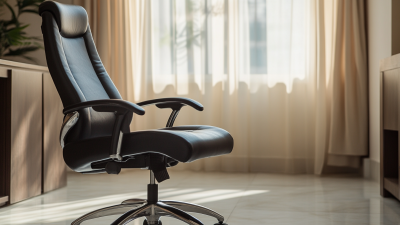
When choosing office chairs for your business in 2026, set a measurable recline target. OSHA’s Computer Workstations eTool recommends a backrest angle between 90° and 120°. That range supports upright work and brief posture changes. Avoid locking every employee into one fixed position.
For keyboard tasks, begin near 100° to 105° and adjust the chair after ten minutes. Your lower back should contact the backrest, while your feet remain flat. The Cochrane review by Shrestha and colleagues found sit-stand interventions reduced workplace sitting by about 1.5 hours daily in short-term studies. This evidence supports movement, but it does not prove that any chair prevents pain or injury. Be careful with broad claims.
Test chairs with real work. Ask employees to type, read, and join a meeting for at least 20 minutes. Check whether the recline mechanism moves smoothly without forcing the shoulders forward. Measure the seat height, backrest tension, and usable recline angle. A chair may advertise 120°, yet its cushion can restrict movement. That detail is easy to miss. Record feedback from shorter and taller users separately. Perfect fit is probably unrealistic, especially across a mixed workforce. Still, a documented target makes purchasing more defensible. Recheck comfort after several weeks, because first impressions can be misleading.
How to Choose Office Chairs for Your Business in 2026
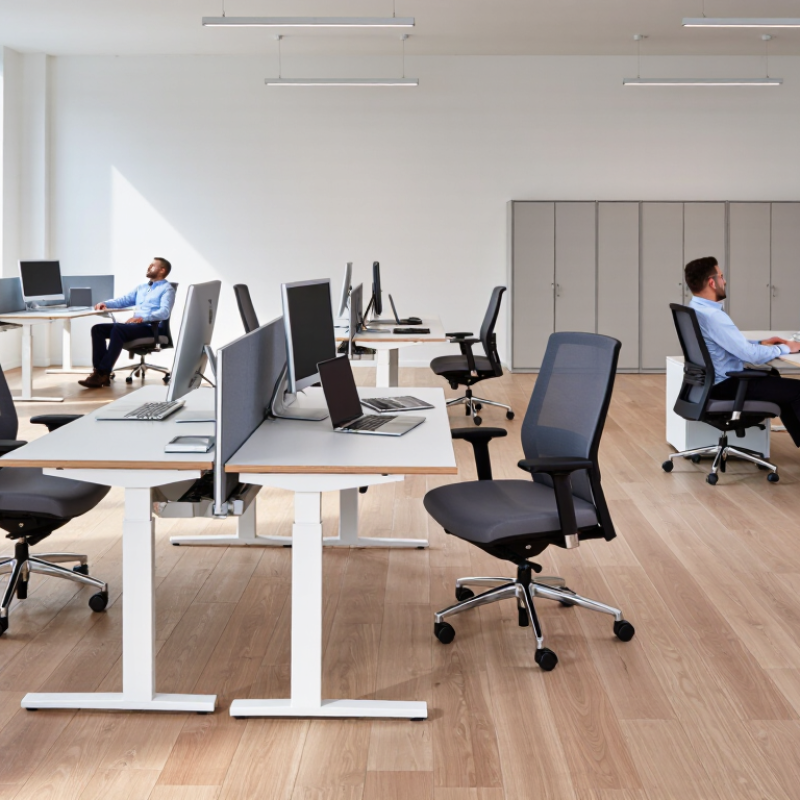
Choosing office chairs requires more than checking appearance or price. Employees differ in height, leg length, posture, and daily tasks. A reliable chair should offer five core adjustments for varied workstations: seat height, seat depth, backrest angle, lumbar support, and armrest height.
Seat height should let both feet rest firmly on the floor, with knees near hip level. Seat depth should leave a small gap behind the knees. Backrest angle and tension should support upright typing and relaxed reading. Adjustable lumbar support should fit the lower back without forcing the spine forward. Armrests should keep shoulders relaxed while elbows remain close to the body. Small changes matter.
Test chairs with real desks.
In workplace assessments, I have seen employees raise chairs too high when desks cannot adjust. A footrest can help, but it is not always the best fix. I once focused too much on lumbar support and overlooked seat depth. Several shorter employees then sat forward, reducing back support. That mistake changed my evaluation process. Now, I ask workers to test each adjustment during typing, video calls, and paper-based tasks. Record the settings, observe pressure points, and review comfort after several hours. A short showroom trial can miss problems that appear during a full workday. Regular checks also matter because equipment, tasks, and employee needs change.
Specify five core adjustments so employees can adapt their chairs to different body sizes, workstation layouts, and daily tasks.
These practical ergonomic planning ranges are commonly used to support a broad range of users. Verify final dimensions against applicable workplace ergonomics guidance and the needs of your employees.
When choosing office chairs in 2026, examine durability before appearance.
A chair may look sturdy yet develop looseness, noise, or uneven support after months of use. ANSI/BIFMA X5.1 provides recognized performance and safety testing for general-purpose office seating. Its durability procedures can include 100,000-cycle testing, depending on the specific component and test method.
Ask suppliers for a complete test report, not just a compliance statement. Check the tested chair model, configuration, load, adjustment settings, and laboratory details.
The report should clearly identify which parts completed the 100,000 cycles. Look for testing related to the seat, backrest, armrests, casters, and base. These details matter in busy offices, where chairs may be adjusted and rolled repeatedly throughout the day.
Test evidence is useful, but it is not a guarantee of perfect service life. User weight, floor surfaces, cleaning routines, and assembly quality can change real results.
I have found that poorly tightened hardware often creates problems sooner than expected. That detail is easy to overlook.
Consider a small workplace trial before ordering in bulk. Let several employees use the chairs for a few weeks, especially at shared desks.
Record squeaks, tilt resistance, wheel movement, and cushion recovery.
A strong purchasing decision combines ANSI/BIFMA X5.1 documentation with practical observation, honest maintenance expectations, and feedback from the people who will sit all day.
How to Choose Office Chairs for Your Business in 2026
When selecting office chairs, sustainability deserves more than a recycled-materials claim. ANSI/BIFMA LEVEL certification offers three certification tiers: Level 1, Level 2, and Level 3. Each tier evaluates environmental and social performance across areas such as materials, energy use, manufacturing, and organizational practices. Level 3 represents the most comprehensive achievement, while Level 1 may suit businesses beginning a measurable sustainability program.
In practice, I recommend checking the certificate’s scope, expiration date, and exact chair model. Ask whether the certification covers the complete product, not only selected components. Also inspect the chair personally. A responsibly sourced chair still fails if its seat compresses quickly or its adjustments feel awkward. Employees notice these details every working day. I have learned that sustainability choices can become complicated when durability, comfort, price, and environmental targets compete. Certification provides useful evidence, but it cannot replace real workplace testing.
Tips: Compare all three levels against your procurement goals. Request supporting documentation from suppliers. Test lumbar support, armrest movement, and seat depth with different employees. Record feedback after several weeks, not only after a five-minute showroom trial. A higher tier may be worthwhile, but only when the chair remains comfortable and repairable. Check replacement parts, warranty terms, and end-of-life guidance before approving a large order. Small gaps often matter.
| Comparison Dimension | LEVEL® 1 | LEVEL® 2 | LEVEL® 3 | What Businesses Should Check |
|---|---|---|---|---|
| Certification position | Entry tier within the ANSI/BIFMA sustainability certification system. | Intermediate tier with a broader sustainability performance profile. | Highest of the three certification tiers, indicating the strongest overall performance against the applicable requirements. | Use the tier as one sustainability indicator, not as a substitute for ergonomic, safety, quality, or cost evaluation. |
| Assessment framework | Evaluated against applicable prerequisites and optional sustainability criteria. | Meets the requirements for Level 1 and achieves additional applicable criteria. | Meets the requirements for Level 1 and Level 2 and achieves the highest applicable performance level. | Confirm the certification is current and applies to the exact chair configuration being purchased. |
| Materials and circularity | Addresses selected material and product-impact requirements. | Addresses additional material transparency, impact-reduction, or circularity criteria where applicable. | Represents the most comprehensive applicable performance level in the certification system. | Ask for material disclosures, recycled-content information, replacement-part availability, and end-of-life guidance. |
| Human and ecosystem health | Includes applicable criteria addressing potential impacts on occupants and the environment. | Includes additional applicable criteria for reducing health and environmental impacts. | Meets the highest applicable tier of requirements in this area. | Review emissions information, chemical disclosures, and evidence of responsible material selection. |
| Energy and atmosphere | Addresses applicable energy- and atmosphere-related criteria within the product assessment. | Achieves additional applicable performance criteria beyond Level 1. | Achieves the highest applicable tier for the assessed criteria. | Request environmental product information when available and include transport, use, and replacement impacts in lifecycle planning. |
| Social responsibility | Includes applicable social-responsibility prerequisites and criteria. | Includes additional applicable social-responsibility performance criteria. | Represents the highest applicable tier for social-responsibility performance. | Check supplier policies covering labor practices, worker safety, ethical sourcing, and supply-chain accountability. |
| Verification approach | Certification is based on documented evaluation against the applicable standard requirements. | Certification requires documented evidence for the higher applicable tier. | Certification requires documented evidence for the highest applicable tier. | Request the certificate, scope, validity period, and product or model identification before purchasing. |
| Ergonomic suitability | The LEVEL® tier does not by itself determine whether a chair fits a particular user or workstation. | Prioritize seat height, seat depth, lumbar support, backrest movement, armrest adjustment, recline control, and user comfort. | ||
| Durability and safety | Sustainability certification is separate from product performance and safety testing. | Verify applicable office-chair safety and durability testing, weight capacity, adjustment-cycle information, warranty terms, and service support. | ||
| Best purchasing use | Suitable when sustainability requirements are part of the specification and budget is tightly controlled. | Suitable for organizations seeking a stronger balance of sustainability performance, functionality, and procurement cost. | Suitable for organizations with ambitious sustainability targets, formal reporting needs, or high-preference green procurement policies. | Select the lowest tier that meets the organization’s documented environmental, social, ergonomic, durability, and budget requirements. |
Note: LEVEL® certification tiers are determined under the applicable ANSI/BIFMA sustainability standard and certification rules. Requirements and documentation may change when the standard is updated; verify current certification details before procurement.
Update your browser to view this website correctly. Update my browser now