Top 10 Energy Efficient Aluminum Windows for Global Buyers?
Choosing the right Energy efficient aluminum windows is not simply a matter of selecting the lowest U-value. Global buyers must consider climate, building orientation, glass specification, frame design, installation quality, and long-term maintenance. A window that performs well in a cold northern city may behave differently in a hot, humid region. Small details matter. Think warm-edge spacers, thermal breaks, low-emissivity coatings, airtight gaskets, and properly sealed corners.
Stephen Selkowitz, a respected building-performance researcher associated with Lawrence Berkeley National Laboratory, has stated, “Windows are the weakest link in the building envelope.” His observation remains highly relevant for architects, developers, and importers comparing international products. Aluminum frames offer strength, slim profiles, recyclability, and design flexibility. Yet ordinary aluminum conducts heat quickly. Effective thermal barriers are therefore essential, not optional.
This guide examines ten Energy efficient aluminum windows for global buyers through practical performance criteria. These include thermal transmittance, solar heat gain control, air leakage, water resistance, acoustic performance, testing standards, and warranty support. Product claims should be checked against independent test reports, not attractive brochures. That part is often overlooked.
There is no perfect window for every market. Budget pressure, local weather, glass availability, and installer skill can change the final result. Even the best frame may underperform when installation is rushed. Buyers should compare certified data, request project references, and verify compatibility with local building requirements. A careful decision may cost more initially, but it can reduce indoor discomfort, energy waste, condensation risks, and replacement costs over time.
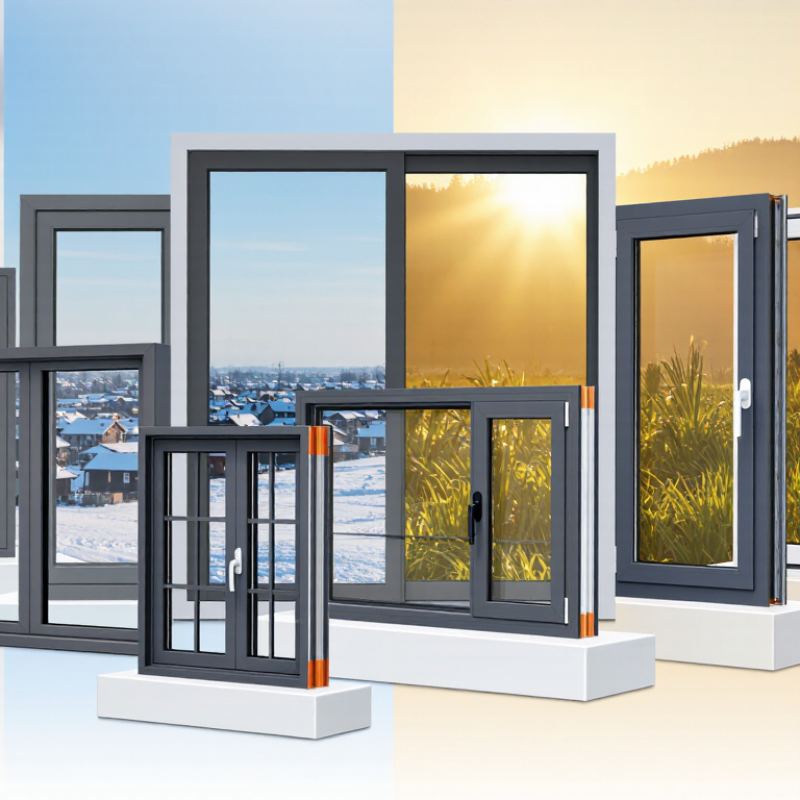
What Makes Aluminum Windows Energy Efficient?
Energy-efficient aluminum windows begin with a thermal break, not aluminum alone. Aluminum conducts heat quickly, so a reinforced polyamide strip must separate the interior and exterior frames. This interrupts the heat path and helps maintain stable indoor temperatures. Better systems also use double or triple glazing, low-emissivity coatings, and argon-filled spaces. These features reduce heat loss during winter and limit unwanted solar gain in summer.
Glass selection should match the building’s climate and direction. A low U-value generally indicates stronger insulation, while solar heat gain should suit local sunlight levels. Warm-edge spacers can reduce condensation around the glass perimeter. Multiple gaskets also improve airtightness and reduce drafts. Small details matter. During site inspections, poor alignment and compressed seals often undermine otherwise capable windows. Installation decides much.
Reliable performance depends on the whole opening, not the frame alone. Proper drainage channels, insulated reveals, and careful anchoring help prevent thermal bridges. Buyers should request tested U-values, air-leakage results, and clear warranty conditions. Certification is useful, but it does not replace accurate installation. I would also question impressive laboratory figures when the project has untrained installers or harsh coastal exposure. Energy efficiency is measurable, yet real buildings remain imperfect. Regular checks can reveal loose hardware, damaged seals, or moisture before energy losses become expensive.
Top 10 Energy-Efficient Aluminum Window Types for Global Buyers
Top 10 Energy-Efficient Aluminum Window Types for Global Buyers
Aluminum windows perform better when design matches climate, glass, and installation quality. The ten strongest options include thermally broken frames, low-E double glazing, low-E triple glazing, argon-filled units, warm-edge spacers, tilt-and-turn windows, casement windows, sliding systems with insulated breaks, awning windows, and solar-control glazing. Thermally broken frames use polyamide barriers to reduce heat transfer through the metal. Casement and awning designs usually seal more tightly than basic sliding windows. Small details matter.
The International Energy Agency reports that buildings consumed about 30% of global final energy in 2022. The U.S. Department of Energy estimates that windows can cause 25–30% of residential heating and cooling energy use. For hot regions, spectrally selective glass can reduce solar gain without making rooms dark. For cold regions, triple glazing and argon filling improve indoor comfort. In real projects, however, oversized glass may weaken the expected savings. Poor installation can also defeat an excellent frame.
Tips: Compare whole-window U-values, solar heat gain coefficient, air leakage, and visible transmittance. Ask for independent test reports, not only catalog claims. Check corner joints, drainage holes, gaskets, and site tolerances. A low U-value is not automatically best for every climate. Local orientation, shading, humidity, and maintenance should guide the final specification.
Which Window Features Suit Different Climates and Building Needs?
Energy-efficient aluminum windows should match the climate, not just the building style. In hot regions, choose low-emissivity glass, solar-control coatings, and thermally broken frames. These features reduce indoor heat near sunny walls. External shading can improve performance further. In cold climates, double or triple glazing, warm-edge spacers, and insulated frame chambers help retain indoor warmth. Air leakage matters too. A beautiful window can still waste energy if seals fail.
Humid coastal areas need durable finishes, corrosion-resistant hardware, and carefully designed drainage paths. In noisy cities, laminated glass may reduce traffic sound while supporting indoor comfort. High-rise projects require tested wind-load ratings and safe opening limits. For schools and offices, easy cleaning and secure ventilation may matter more than maximum glass size. From installation experience, small fitting gaps often undermine expensive specifications. That detail deserves more attention.
Tips: Check the local climate zone before selecting glass. Ask for tested U-values, solar heat gain data, and air-leakage results. Confirm the frame’s thermal break depth, not only its appearance. Use professional installation and inspect corners, gaskets, and drainage holes. Avoid choosing triple glazing automatically; it can add weight, cost, and hardware stress. In mild climates, a well-installed double-glazed unit may perform better overall. Reassess the decision after reviewing orientation, shading, and daily occupancy.
Top 10 Energy-Efficient Aluminum Window Configurations for Global Buyers
The chart compares representative design targets for different climates and building needs. Lower U-factor means better insulation, while SHGC indicates how much solar heat enters through the glazing.
U-factor is shown in W/m²·K; SHGC is dimensionless. Values represent commonly specified performance targets for thermally broken aluminum frames with low-emissivity insulating glass. Final specifications should be verified through project-specific testing and applicable standards such as NFRC or EN 14351-1.
How to Choose a Reliable Global Aluminum Window Supplier
Choosing a reliable global aluminum window supplier requires more than comparing prices. Energy performance depends on the complete system: aluminum profiles, thermal breaks, glazing, seals, hardware, and installation guidance.
Request verified U-value, air-tightness, water resistance, and wind-load reports for the exact window configuration. Do not accept figures from a different glass or frame combination. A serious supplier should explain testing methods and provide documents recognized in your project’s market. Ask for factory photos, production capacity, quality-control records, and a physical sample with corner joints, drainage paths, and locking points.
Look closely at communication. Can the supplier answer technical questions clearly? Do drawings show tolerances, opening directions, and glass specifications? A dependable partner confirms local building requirements before production, rather than promising that one design fits every country. Check lead times, packaging, replacement parts, warranty terms, and payment conditions in writing.
Visit the factory if possible.
A polished catalog proves little.
Small details often expose risk. For example, weak protective film or poorly sealed sample corners may indicate careless handling. Independent inspection can catch defects before shipment. Still, no supplier is perfect; delays and design changes happen. The important question is whether the company records problems, proposes measurable corrections, and communicates early. Choose evidence over confident claims, and test the final configuration before ordering at scale.